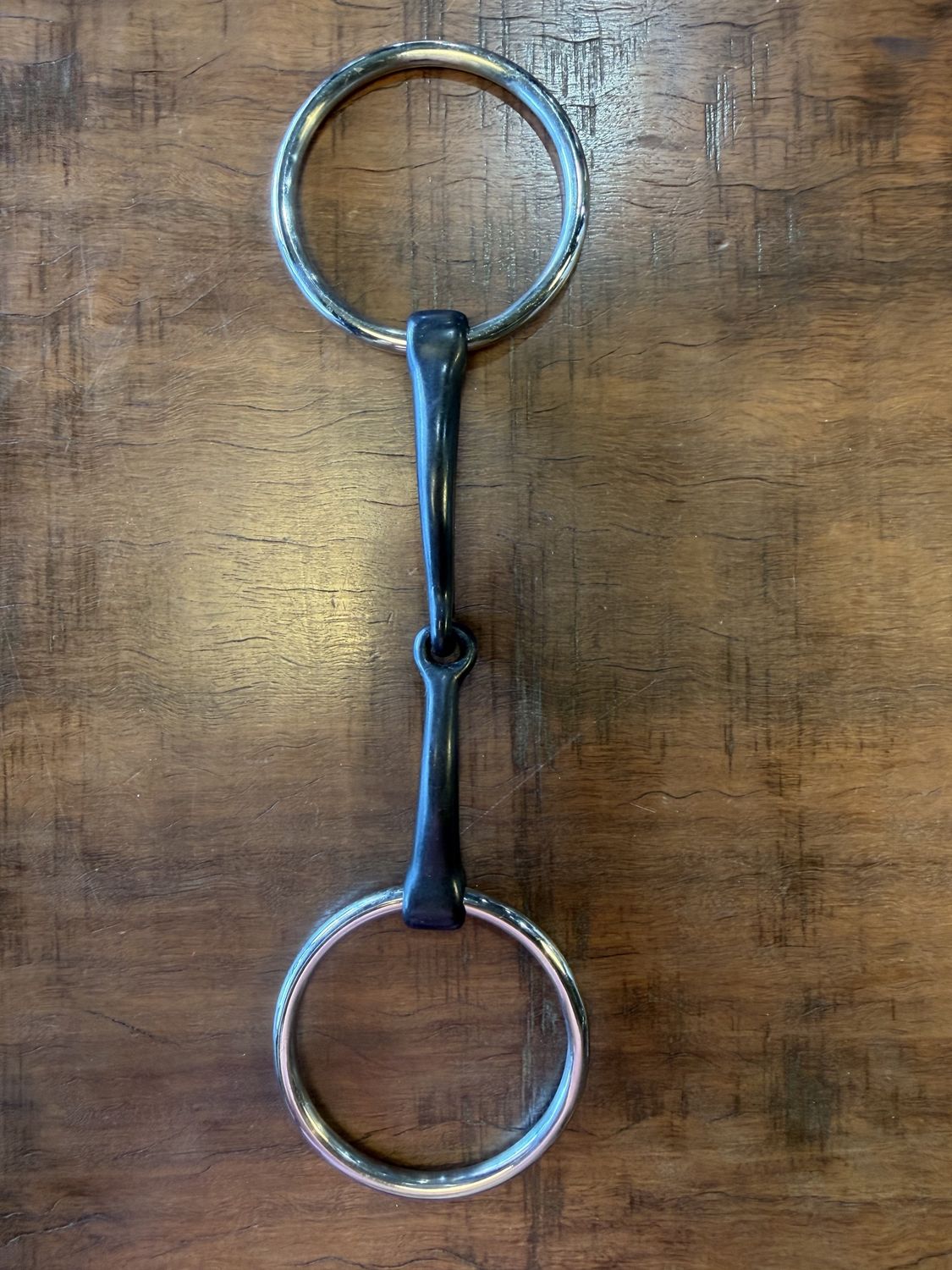
Curved Standard Mouth Snaffle Bit 2.5" rings
Share
$39.95
Sold out
Price incl. GST (10%) $3.63
Size
Please choose
Sold out
Have questions?
Curved Standard Mouth Snaffle Bit 2.5" rings
Share
Product details
Brand: Top Hand Saddlery
The Curved "Standard" Mouthpiece
Relieves Tongue Pressure: The curve is designed to follow the natural contours of the horse's mouth. This helps distribute pressure more evenly across the bars and tongue rather than focusing it all in one spot.
Reduces "Nutcracker" Action: In a traditional straight single-jointed bit, the joint can poke the roof of the mouth (palate) when the reins are pulled. The curve helps the bit collapse more naturally, softening that poking sensation.
The 2.5-Inch Rings
A 2.5-inch ring (approx. 65mm) is the most common "standard" size for snaffle bits. While the sweet iron and curved mouthpiece benefits remain the same—promoting salivation and reducing the "nutcracker" poke—the smaller 2.5-inch rings change the bit's aesthetics and feel.
Aesthetics & Proportion: Smaller rings often look more refined and in proportion on horses with smaller heads, such as ponies or fine-boned breeds.
Reduced Weight: Because there is less metal than in a 3-inch ring, the bit is slightly lighter, which some sensitive horses prefer.
Direct Feel: Smaller rings have less "travel" than larger rings. This means your rein aids are transmitted slightly more directly to the mouthpiece, offering a quicker signal.
Less Interference: Larger 3-inch rings can sometimes interfere with a low-fitting noseband or rub against the horse's cheekbones. The 2.5-inch size offers more clearance.
Traditional Look: This size is the "classic" choice for most English disciplines and is frequently used as a bradoon in a double bridle because it takes up less space on the side of the face.
The Benefits of Sweet Iron
Encourages Salivation: Sweet iron oxidizes (rusts) over time. This process creates a sweet taste that horses find palatable, encouraging them to "mouth" the bit and produce saliva, which leads to a softer, more relaxed jaw.
Warmth: Unlike stainless steel, which can feel cold and clinical, sweet iron warms up quickly to the horse's body temperature, making it more inviting.
Display prices in:AUD